
A is for Ax
I still have mine

Family photo 2026
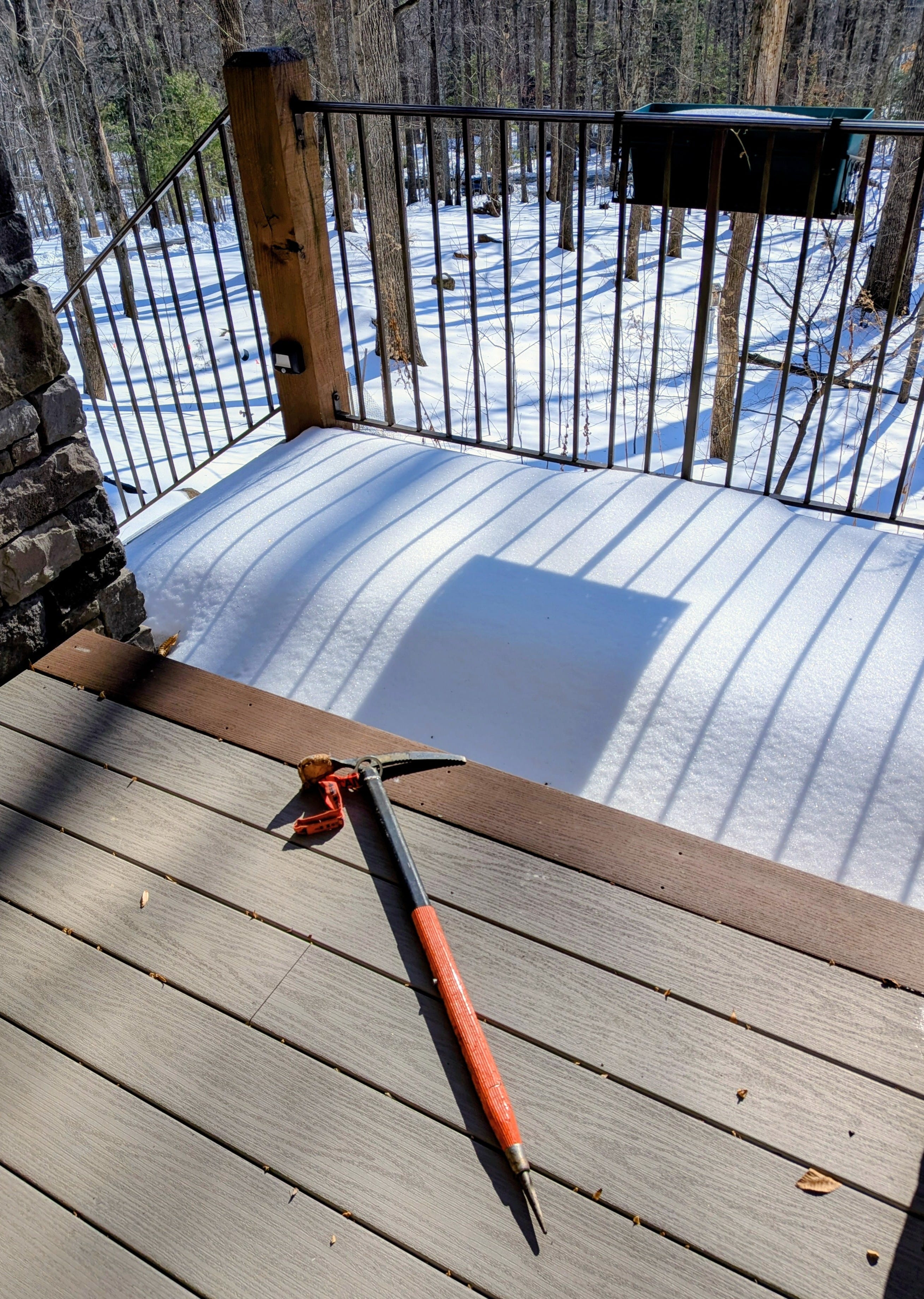
Last weekend’s January storm (25th) dumped maybe six inches of snow on our slope, followed by several hours of sleet. After a couple of days, in subfreezing temps, a hard crust formed, so the brilliant white expanse became an ice field. We didn’t leave the house. We’d left a car at the bottom of our long, steep driveway, but we couldn’t get to it, even if we wanted to. A plow cleared the street, leaving a high berm of heavy snow/ice blocking the base of the driveway. We hired someone to plow, and he was able to mostly clear the berm at the base of the slope, but when he tried to plow up the driveway, he slid back down. No go.
Friends announced, three days after the storm, that they were coming to help. We asked if they needed pickaxes because that’s what we figured was needed. They said, no, they have their own equipment. The family of five arrived, two adults and a 13-year-old doing most of the work while the two younger ones helped and then enjoyed sliding down the icy slope. They dug out the car and hacked a path up to the garage, so at least we could walk safely down to our car.
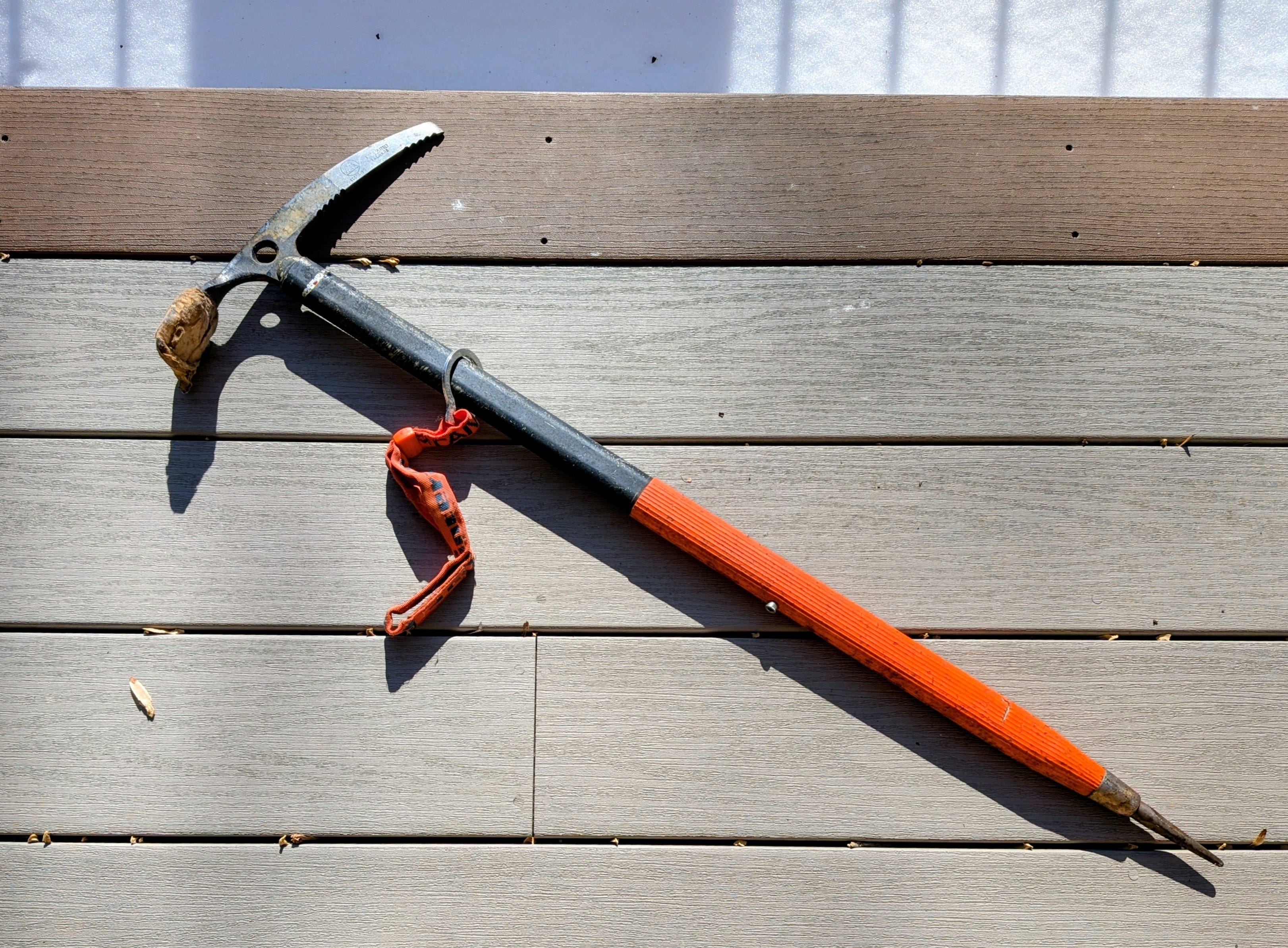
I thought about going out with my ice ax to work on the ice berm blocking the garage, but the cold convinced me to stay inside. I pulled out my ax anyway, feeling nostalgic just looking at it. The ice ax is 50 years old, purchased when we took the Sierra Club’s Basic Mountaineering Training Course in Orange County, CA, in the late 1970s. Bruce gave his away years ago; I insisted on keeping mine. It’s one of the few items that I consider a treasure. It’s the only weapon I own, besides bear spray.
My ice ax saved my hide back in the ‘70s on Mt. Whitney, so I owe it some gratitude. We were descending from the peak and needed to glissade down a steep slope using our axes to control speed. We’d learned the technique in training and felt confident we could descend safely. Bruce went first and expertly slid down the slope to the boulder-strewn base. Looking at his tiny figure down there, I was surprised at how far away the bottom of the slope actually was. I sat down on the hard-packed snow, holding my ax in front of me, daypack snug on my back, all skin covered. Planting the tip, I wiggled to start my slide. Halfway down, I realized I was sliding too fast. Pushing harder on the ax tip didn’t slow my slide. Rocketing down the slope, I knew I’d have to arrest my descent, or I was going to hit the boulders. I flipped over onto my stomach, slamming the pointed end of the ax into the icy slope, exactly as we’d been trained to do. I stopped abruptly, breathlessly stretched out full length in the snow. Once my breathing eased, I sat up, repositioned the ax, and finished the glissade safely.
In our younger years, we fearlessly backpacked and hiked in winter conditions. Grand Teton is usually icy much of the way up, or at least it was in 1976 when we stood on top. The ice axes went with us on that ascent. There was a failed attempt on Mt. Washington in New Hampshire in the late 1970s during which we wisely decided not to attempt the summit in a white-out, even with all appropriate equipment, including ice axes, even though we’d spent a full day hiking as far as we could go before camping in snow. Kilimanjaro in Tanzania is always in winter mode. We made two trips up that mountain in 1984 and 1990. The second time, we hiked around the perimeter of the cone to the summit marker, in hard-packed snow, wearing crampons and using our ice axes as hiking staffs. Even in nearby winter hiking a few years ago, my ice ax went along. You never know when you’re going to need to hack at something.
Family photo 2026
My ancient ice ax didn’t see any action after all this week. Eventually, our driveway was cleared to the garage with the final effort accomplished by a vehicle called a skid steer. I learn new words nearly every day. We await the next snowfall this weekend, if predictions hold. Our car is in the garage, the mail was delivered, the generator tested itself, and we brought in burgers and fries for ourselves and our friends who dug us out. Winter lumbers on. We still have to get through February.
That was fun to read, Jan! I too, have used an ice ax (There seems to be some disagreement on the internet about ax vs. axe, BTW) when glissading in the Teton Mountains! I took two back to back summer college courses in Wyoming through Albion College. One of our Bio professors taught both courses--Mountain Ecology and Mountaineering. That would have been 6 weeks total during July/August 1975, when snow & ice still persisted at the highest elevations during the summer. I remember the practicing, but I don't remember ever needing to halt a slide down on an emergency basis. I do remember a girl in the Mountaineering class accidentally slipping into a shallow crevasse--maybe 10 feet max. We had been crossing a bit of a "bridge" between 2 shallow crevasses without any sort of ropes, etc, as it didn't seem too dangerous. That may've turned out to be a good thing, because she might have taken other students with her! But, we did get her out safely.
I don't remember any sort of walking stick at Kilimanjaro, but maybe I did have one. I don't remember the crampons, either, but maybe our whole (little) group did wear them. I'd have to dig out my photographic slides to see what was on my feet! Maybe I should go out snow shoeing instead of walking for my exercise this afternoon!
Whether you need it again or not, your ax is a symbol of a lifetime of adventures. There's no reason not to keep it!